Our Akaushi Heritage
A Century of Perfection
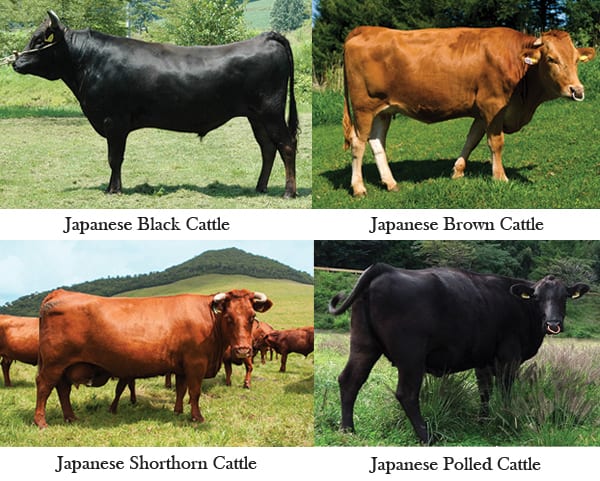
For more than a hundred years, the Akaushi breed has been shaped by dedicated Japanese breeders focused on continual genetic refinement. Known locally as Japanese Brown, the red-coated Akaushi are among Japan’s most treasured Wagyu lines. The name Japanese Brown was the first used in scientific literature to describe this remarkable breed.
The Power of Data and Precision Breeding
Over 80 years ago, the Japanese Association of Akaushi was established to collect, manage, and analyse detailed information on every animal in the breed. This includes carcass performance, breeding pedigrees, and economic data — all meticulously recorded and used for genetic selection over generations.
Each new line of Akaushi dams and sires is chosen through rigorous statistical analysis, ensuring that only proven bloodlines are released for production. This closed and disciplined breeding system has produced an exceptionally uniform and consistent breed, renowned for its maternal strength, fertility, structural soundness, and outstanding beef quality.
A Breed of Balance
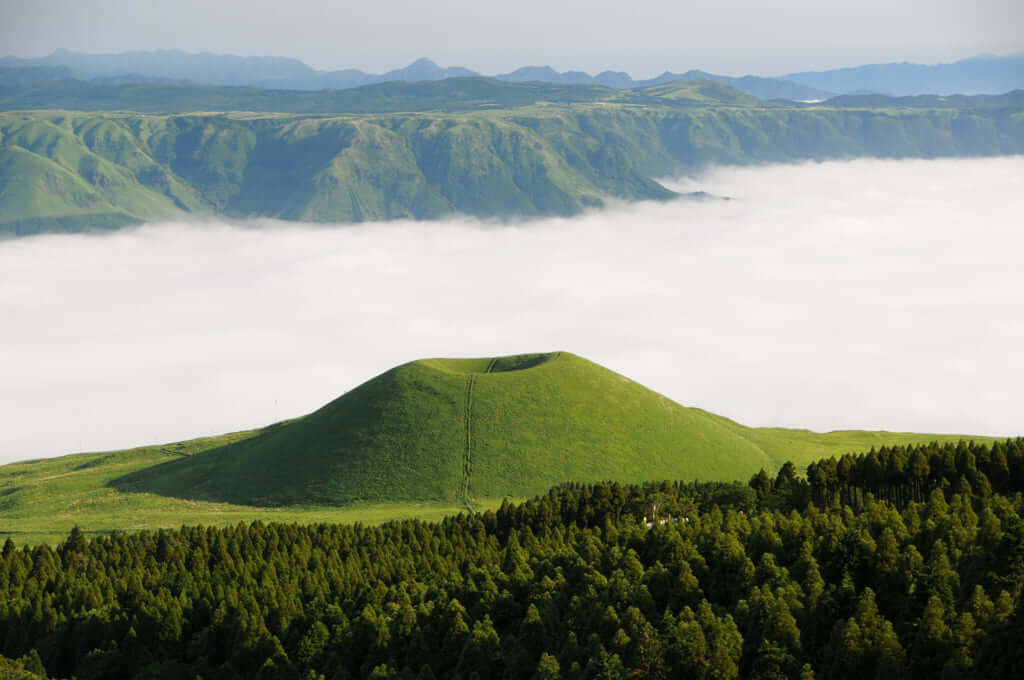
The Sacred Lands of Mount Aso
The marbling of Akaushi beef contains a higher percentage of monounsaturated fat than most other breeds, making it not only exquisite in taste but also recognised for its health benefits.
A National Treasure
A Legacy That Lives On
Today, Akaushi cattle from Kumamoto continue to produce beef of unmatched quality and consistency. Their genetics are prized worldwide for improving carcass traits, increasing weaning weights, and maintaining the renowned low birth weights of Wagyu.
The Akaushi legacy represents more than exceptional beef — it stands as a testament to balance, precision, and the pursuit of perfection that defines true Wagyu heritage.

Built for the Tropics
Perfectly Suited to Warm Climates
In regions characterised by vast savannas, high humidity, and intense sunlight — such as many parts of Africa — cattle with red, yellow, or cream coats and pigmented hides are best adapted to withstand the elements. Akaushi cattle, influenced historically by Simmental and South Devon genetics, display these characteristics while maintaining the refined carcass traits of modern beef breeds: high marbling, superior tenderness, consistent quality, and minimal external fat.
The introduction of Akaushi genetics into crossbreeding programmes offers producers a powerful advantage. Their proven adaptability and ability to deliver premium, marbled beef result in higher returns and improved meat quality — both locally and for export markets.
With South Africa’s large population of Zebu-type cattle, Akaushi stands as the ideal breed to elevate the nation’s beef production. It brings together the best of both worlds: the hardiness and climate resilience needed for African conditions, and the unmatched eating quality that defines true Wagyu.
The 1994 Import: A Defining Moment
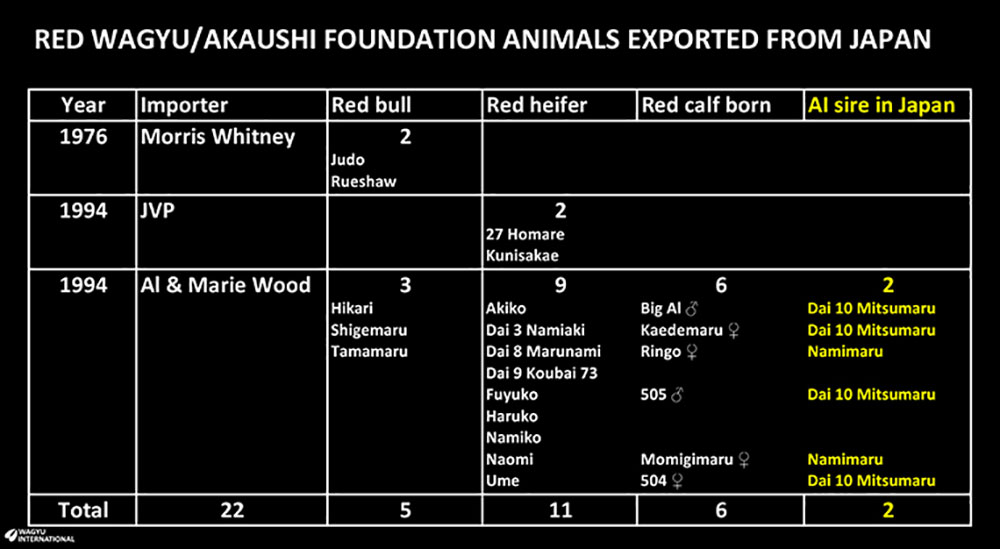
In 1994, a pivotal shipment of ten live Akaushi arrived from Japan, forming the genetic foundation of the modern fullblood Akaushi population outside Japan. This import was led by Dr. Al and Marie Wood, in collaboration with Mr. Yukio Kurosawatsu and Dr. King from the Kumamoto Prefecture.
The shipment included nine females — Namiko, Ume, Namoi, Akiko, Haruko, Fuyuko, Dai 3 Namiaki, Dai 9 Koubai 73,and Dai 8 Marunami — and three bulls — Shigemaru, Tamamaru, and Hikari. These animals became the cornerstone of the breed’s genetic base in the United States and are now registered with both the American Wagyu Association (AWA)and the Akaushi Association of America.
The First Akaushi Born Outside Japan
Before export, these heifers were artificially inseminated with semen from two of Japan’s top sires at the time — Namimaru and Dai 10 Mitsumaru. Three of the heifers arrived pregnant, and their calves — Big Al, Kaedemaru, Momigimaru, Ringo, 504, and 505 — became the first Akaushi ever born outside Japan.
Following the mandatory 180-day quarantine period, Namoi, Dai 3 Namiaki, Kaedemaru, and Momigimaru were transferred to Ontario, Canada, while the remaining cattle joined Englewood Farm in Texas. Eventually, the entire Red Wagyu/Akaushi herd was purchased and consolidated under Heart Brand Beef, which continues to be a leading name in Akaushi production today.
The Japanese Venture Partners Import
In addition to the 1994 consignment, Japanese Venture Partners imported two Akaushi heifers — Kunisakae and 27 Homare. Both were in calf upon arrival and were later sold to Bruce Hemmingsen in Texas, adding further diversity to the foundation Akaushi genetics outside Japan.
A Legacy of Genetic Excellence
Introducing the Akaushi foundation animals
With over nine years of dedicated research, genetic tracing, and multiple visits abroad, we’re proud to say that the Beyond Beef herd now carries every one of the original Akaushi bloodlines exported from Japan between 1976 and 1994. This remarkable achievement connects our herd directly to the historic foundation animals that shaped the global Akaushi breed.
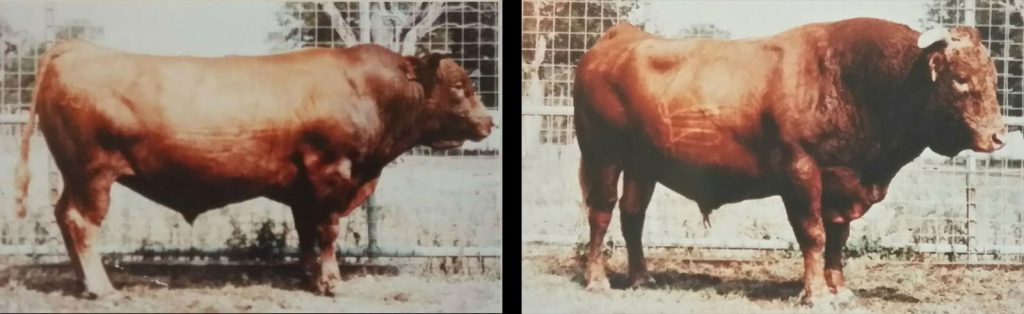
Below are some of the original cattle that made their journey from Kumamoto, Japan, to the USA — the cornerstone of all Akaushi herds outside Japan.
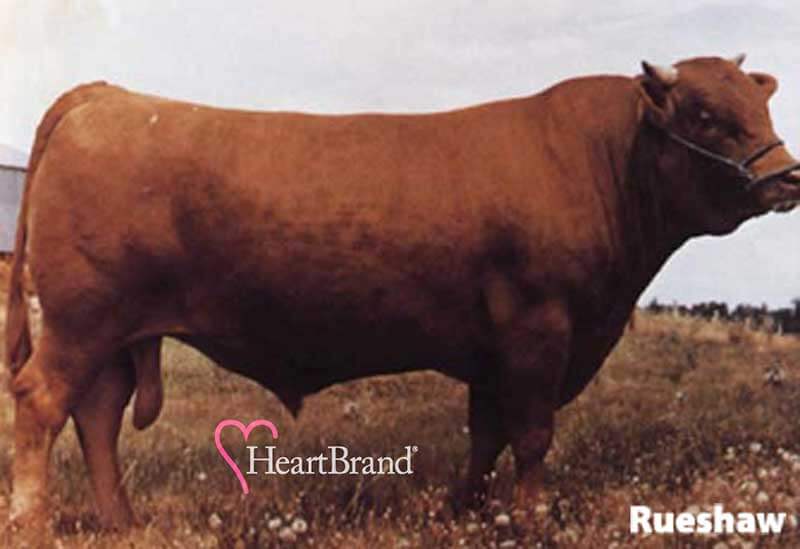
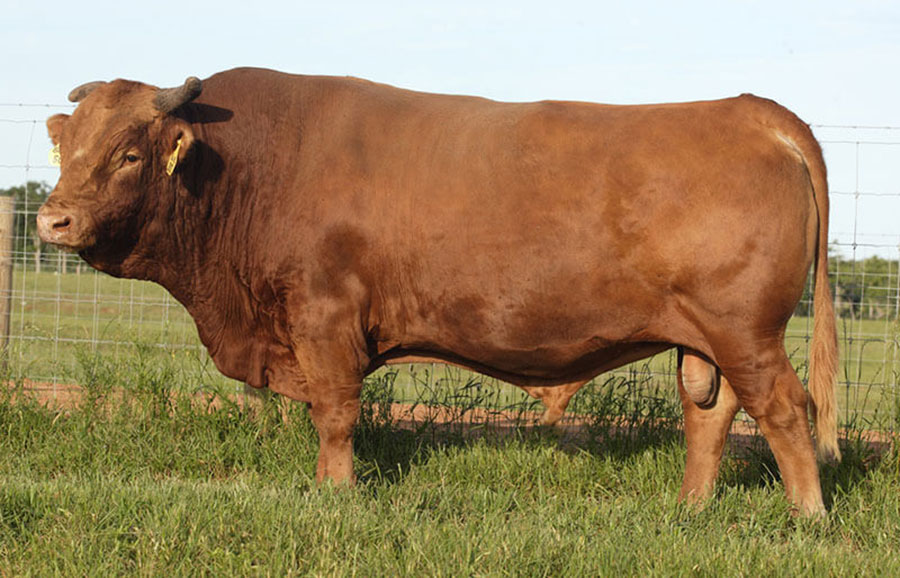

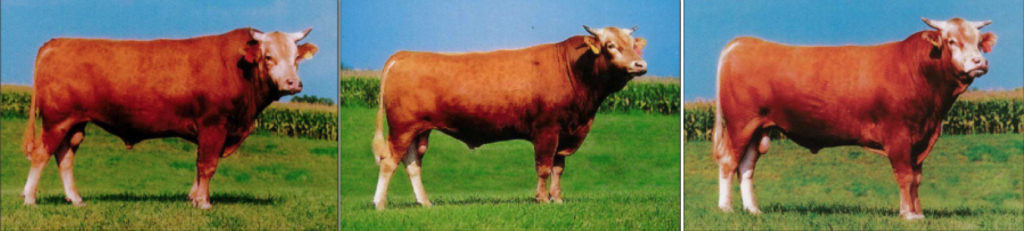
Akiko & Fuyuko — The Legendary Matriarchs
The Akiko and Fuyuko bloodlines hold legendary status in the world of modern Akaushi cattle. Akiko was renowned as one of the stoutest and most powerful Akaushi females of her time — her Shigemaru daughters are still celebrated today for their exceptional maternal strength and consistent performance. Fuyuko, equally remarkable, was admired for her elegance, structure, and balance. Her Big Al daughters helped define an entire generation of Akaushi genetics, leaving a lasting imprint on the breed’s history. Both cows lived beyond 20 years of age — a testament to the resilience, fertility, and longevity that have become synonymous with their names.

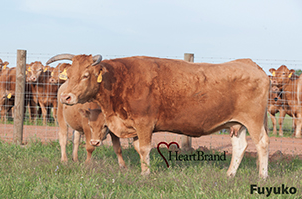
Kaedemaru — A Living Legend
Few Akaushi carry a story as remarkable as Kaedemaru. The daughter of Dai 3 Namiaki Ni — one of the original females imported from Japan — and sired by the great Dai 10 Mitsumaru, Kaedemaru embodies the strength and resilience of her lineage. She is the only surviving animal from the group of Akaushi exported to Canada in the 1990s. Later acquired by Bill Fisher and brought to Texas, Kaedemaru stood out for her exceptional phenotype and rare genetic profile, representing valuable maternal outcross lines from Dai 10 Eihou and Dai 3 Namiaki. Remarkably, Kaedemaru continues to thrive at 23 years old, a living testament to the enduring vitality of true Akaushi genetics.
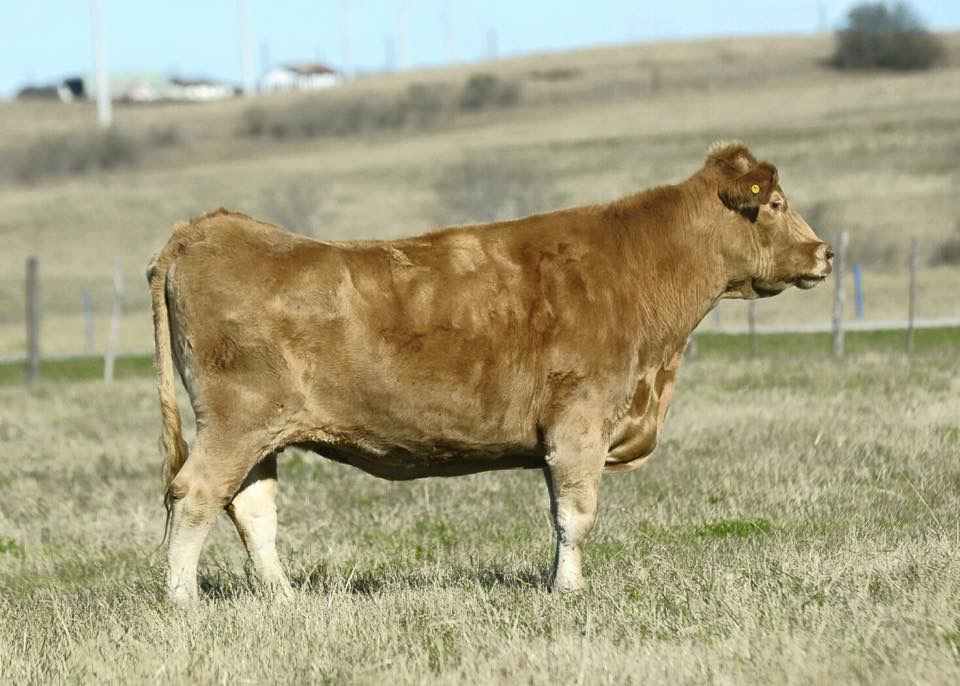
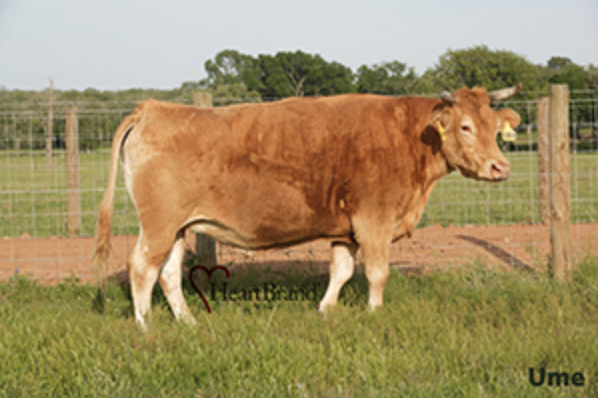
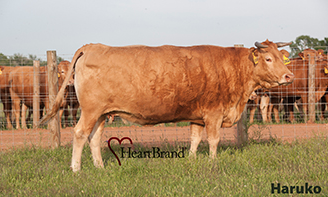
Ume & Haruko — Rare Gems
Though Ume and Haruko appear in only a handful of pedigrees today, their influence shines through in the exceptional quality of their descendants. Representing a small but powerful fraction of the Akaushi population in the Western Hemisphere, these two remarkable females are known for producing offspring of outstanding type and longevity. Wherever their bloodlines appear, you can expect three things — long-lasting productivity, uncompromising quality, and a presence that commands attention. Their legacy endures quietly yet powerfully, a reminder that true genetic value is measured not by numbers, but by impact.
Cow 504E, Dai 9 Kobai & Ringo 117 — The Hidden Treasures
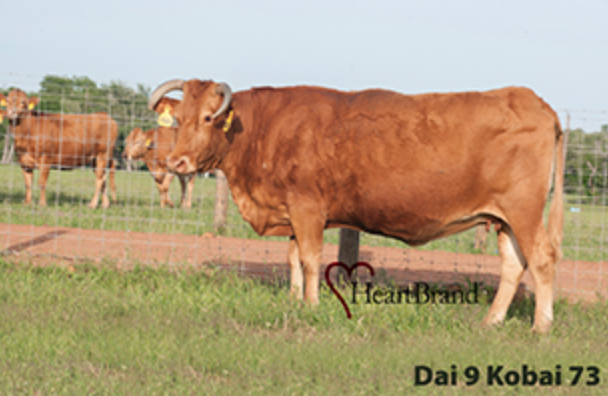
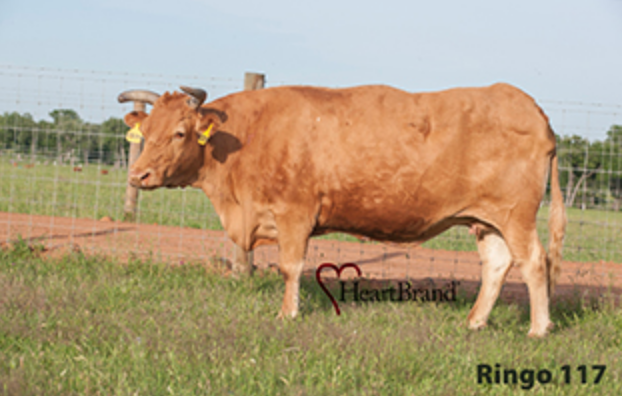
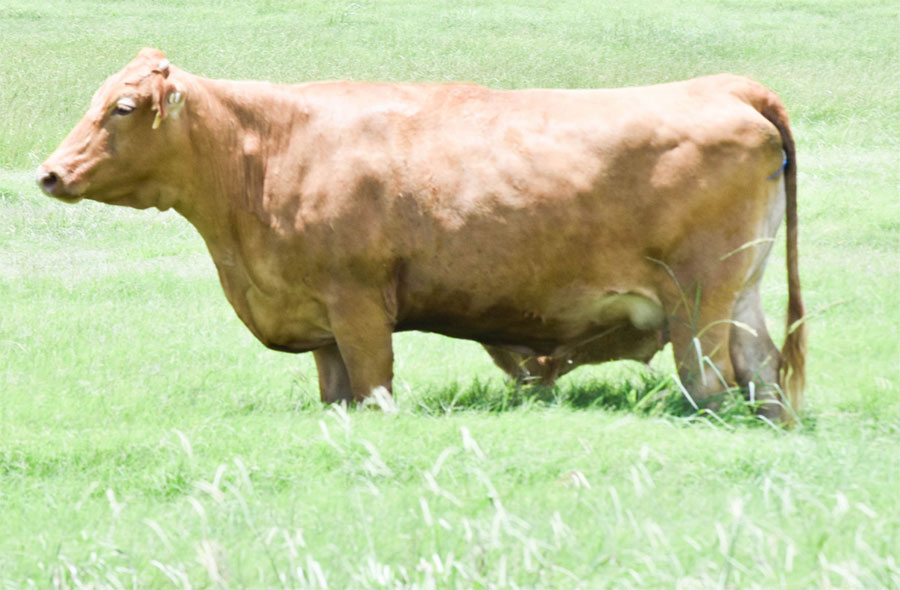
These three rare females — Cow 504E, Dai 9 Kobai 73, and Ringo 117 — represent some of the most elusive and valuable genetics in the Akaushi breed.
Ringo 117, born in Japan in 1994, was the natural calf of the renowned Dai 8 Marunami. Her lineage is treasured for its purity and depth, making her descendants exceptionally sought after. Cow 504E, affectionately known as “The Elephant Cow”, was born in 1995 — the natural calf of Ume by Dai 10 Mitsumaru. Her impressive body mass, strength, and trademark large feet earned her name and reputation as a foundation of power and performance. Dai 9 Kobai 73, meanwhile, stands out as the great dam of Buckcherry S2421R, widely regarded as one of the finest females in the HeartBrand herd today.
Together, these extraordinary cows embody the rare blend of strength, femininity, and lasting genetic influence that defines the true heart of Akaushi heritage.